By Howard Morrel & Leslie Hirsch
When a decedent owned real property or a cooperative apartment in New York, the sale or transfer of that asset almost always triggers a discussion around New York State estate tax liens. One form in particular, Form ET-117 (Release of Lien of Estate Tax), is frequently misunderstood and often becomes a source of avoidable delay in estate real-estate transactions.
For estate attorneys advising executors, trustees, and beneficiaries, understanding how and when ET-117 applies is critical to ensuring a smooth and timely closing.
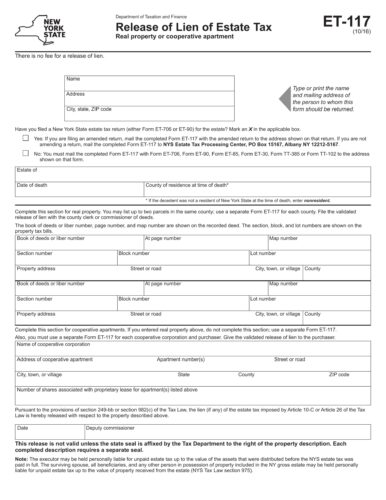 What Is Form ET-117?
Under New York Tax Law, an automatic estate tax lien arises at death on all New York real property and cooperative interests owned by the decedent. This lien exists whether or not estate tax is ultimately owed and remains in place for up to 15 years unless formally released.
Form ET-117 is the mechanism used to request a release of that lien from the New York State Department of Taxation and Finance, allowing the property to be conveyed free and clear.
Without this release, title companies and managing agents will typically refuse to proceed with a closing or transfer.
Why ET-117 Matters in Estate Real-Estate Transactions
In practice, ET-117 is not merely a tax form. It is often a gatekeeper to closing.
From a transactional standpoint:
-
Title insurers generally require confirmation that the estate tax lien has been released before insuring title.
-
Buyers and lenders expect clear, insurable title at closing.
-
Co-op boards and managing agents frequently require evidence of lien release even though co-ops are technically personal property.
-
Delays in filing or processing ET-117 can derail otherwise straightforward transactions, particularly in time-sensitive estate administrations.
For estates with carrying costs, market exposure concerns, or multiple beneficiaries, these delays can materially affect outcomes.
When Is ET-117 Required?
ET-117 is commonly required when:
-
Real property or a cooperative apartment is being sold, transferred, or refinanced after death.
-
The property is passing to a beneficiary prior to sale.
-
The estate has not yet received confirmation that no New York estate tax is due, or that any tax due has been satisfied.
Even in estates well below the New York estate tax exemption, the lien still exists by operation of law and must be addressed.
Coordinating ET-117 with Other Estate Tax Filings
ET-117 does not stand alone. Depending on the estate, it may be filed in coordination with:
-
ET-706 (New York Estate Tax Return), if required
-
ET-85 (Estate Tax Certification of No Tax Due), in smaller estates
-
ET-30, in certain lien-release scenarios
Incomplete or inconsistent filings are a common cause of processing delays. Early coordination between legal counsel, tax advisors, and the real-estate team is essential.
Timing Considerations and Practical Impact
Processing times for ET-117 can vary, and practitioners should assume that several weeks may be required, particularly during peak filing periods.
From a real-estate perspective, this timing affects:
-
When a property can be marketed as ready to close
-
Contract closing dates and adjournment provisions
-
Buyer expectations and financing timelines
-
Estate liquidity planning and distributions
We often advise that ET-117 planning begin well before a contract is signed, not after.
The Real-Estate Team’s Role 
In estate and trust sales, experienced real-estate professionals can add significant value by:
-
Identifying early whether an ET-117 release will be required
-
Flagging timing risks before contracts are executed
-
Coordinating with estate counsel, accountants, and title companies
-
Structuring closing timelines that reflect administrative realities
At Christie’s International Real Estate Group, our Trusts & Estates Division works closely with estate attorneys and fiduciaries to ensure that tax,
title, and transactional requirements are anticipated, not discovered at the closing table.
Final Thoughts
Form ET-117 is a technical document, but its impact on estate real-estate transactions is substantial. For estate attorneys, proactive handling of the estate tax lien and early coordination with the real-estate team can significantly reduce friction, delays, and client frustration.
A thoughtful, integrated approach protects fiduciaries, beneficiaries, and buyers alike.
Disclaimer
This article is for general informational purposes only and does not constitute tax or legal advice. Estate attorneys, executors, and fiduciaries should consult with qualified tax and legal advisors regarding the specific facts and circumstances of each estate.
All the best,
Howard Morrel & Leslie Hirsch
Co-Founders, Trusts and Estates Division
Christie’s International Real Estate Group
(212) 956-4823
mha@christiesrealestategroup.com
About the Authors
Howard Morrel and Leslie Hirsch are co-founders of the Trusts and Estates Division at Christie’s International Real Estate Group. With over 20 years of experience in high-value real estate transactions, they specialize in guiding executors, trustees, and families through the unique complexities of estate-related property sales in New York City.