
By Howard Morrel & Leslie Hirsch
After years of uncertainty surrounding Manhattan’s office market, Midtown is approaching an important milestone: office availability is moving back toward levels last seen before the pandemic.
As recently reported by The Real Deal, citing Colliers market data, Midtown is now remarkably close to returning to its March 2020 level of available office space. The broader trend has been building throughout 2026. Colliers reported that Midtown availability fell to 12.3% in the second quarter, with available supply reaching its lowest level since June 2020. Average asking rents rose to $84.99 per square foot, less than 1% below their March 2020 level.
For Midtown generally — and 57th Street and Billionaires’ Row in particular — this is significant.
Why the Office Recovery Matters to Billionaires’ Row
The residential and commercial markets are different markets, and a tightening office market does not automatically translate into higher condominium prices. But the resurgence of Midtown’s business districts removes one of the headwinds that has weighed on perceptions of Midtown residential real estate since 2020.
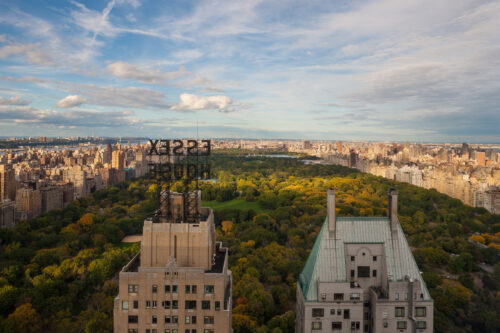
Billionaires’ Row does not exist in isolation. Buildings such as 220 Central Park South, Central Park Tower, One57, 111 West 57th Street and 432 Park Avenue are part of a larger Midtown ecosystem that includes major corporate headquarters, financial firms, luxury retail, restaurants, hotels, cultural institutions and Central Park.
A thriving office market means more executives and employees coming into Midtown, greater demand for restaurants and services, increased pedestrian activity and more confidence in the neighborhood as a place to both work and live.
For prospective buyers evaluating Billionaires’ Row real estate, particularly those who work in finance, investment management, law and other industries concentrated in Midtown, the convenience of living minutes from the office is once again becoming a meaningful selling point.
There is evidence of that demand directly on 57th Street.
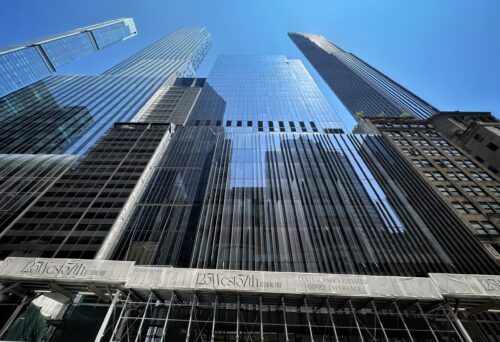
The new office development at 125 West 57th Street, for example, has attracted firms including Eldridge Industries, Anchorage Capital Advisors, Jadian Capital and Kingdon Capital Management. Most recently, international financial firm Aegon, which is rebranding as Transamerica, selected the building for its U.S. headquarters. More than 75% of the approximately 265,000-square-foot property has reportedly been leased in just two years.
That is a particularly interesting signal for the 57th Street corridor: premium office tenants are choosing to locate on the same blocks that have become synonymous globally with ultra-luxury residential real estate.
The Flight to Quality Is Happening on Both Sides of the Market
Perhaps the most relevant parallel between the office and luxury residential markets is the continuing flight to quality.
The Midtown office recovery has not benefited every property equally. Colliers notes that the headline availability numbers can obscure a much tighter market for desirable, well-located, highly amenitized office buildings. Tenants seeking premium space have considerably fewer choices than the overall availability rate might suggest.
We see a similar dynamic in Midtown luxury real estate.
Buyers remain selective. Exceptional apartments with extraordinary Central Park views, superior layouts, strong architecture and best-in-class services can attract attention, while properties that are compromised by condition, layout, view or pricing may take considerably longer to sell.
In other words, a recovering Midtown does not mean that every office — or every apartment — suddenly becomes desirable. Quality and pricing still matter enormously.
A Stronger Midtown Is Good News for 57th Street
There is another important component to the story: Midtown itself continues to evolve.
Some older office properties that are no longer competitive are being repositioned or converted to residential use. At 135 East 57th Street, for example, plans call for the former office tower to be converted into approximately 350 apartments.
At the same time, newer and renovated office buildings are attracting employers willing to pay for quality.
The result could ultimately be a healthier balance for the neighborhood: fewer obsolete offices, more housing, stronger premium office buildings and a more active street-level environment.
For Billionaires’ Row condos, that matters.
One of the questions surrounding Midtown residential real estate after 2020 was whether the neighborhood’s traditional role as New York’s commercial center had permanently diminished. The latest leasing data increasingly suggests otherwise.
Manhattan office leasing has been running well above recent historical norms, availability has been declining, sublease inventory has tightened dramatically, and premium Midtown office space is becoming increasingly competitive. Colliers reported that through July, Manhattan leasing volume had reached 26.66 million square feet, putting 2026 on pace for potentially its strongest leasing year since 2000 if that momentum continues.
What We’re Watching
We would not interpret the office recovery as a prediction that Billionaires’ Row condo prices will suddenly rise. The ultra-luxury residential market is influenced by its own set of factors, including inventory, interest rates, international demand, financial markets and seller pricing.
But real estate is ultimately about location, and the strength of the surrounding neighborhood matters.
A Midtown that is busy, economically productive and attracting major companies is fundamentally more supportive of residential values than a Midtown characterized by empty offices and uncertainty about its future.
Five years ago, there was serious debate over whether Manhattan’s central business districts would ever fully recover from remote work.
Today, the conversation has changed considerably.
For owners, buyers and sellers along West 57th Street, Billionaires’ Row, Central Park South and the surrounding Midtown luxury market, that is an encouraging development worth watching.
Want to learn more? Let’s talk!
All the best,
Howard Morrel & Leslie Hirsch
Christie’s International Real Estate Group
(212) 956-4823
mha@christiesrealestategroup.com
