
The Fifth Avenue landmark will suspend hotel operations in January 2027, beginning a lengthy restoration at one of New York’s most recognizable addresses.
By Howard Morrel & Leslie Hirsch
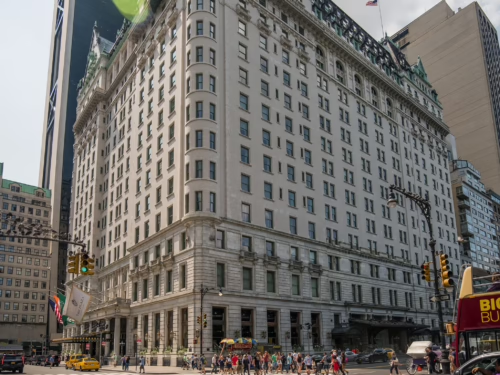
Long before Billionaires’ Row reshaped the skyline, The Plaza defined a certain idea of New York luxury.
Now, the hotel at Fifth Avenue and Central Park South is preparing for an extended pause. In an announcement issued on October 14, The Plaza confirmed that it will close beginning in January 2027 for at least four years while its landmark-protected façade undergoes repair and restoration.
For those who know the address through afternoon tea, family celebrations or a familiar walk along Central Park, the closure will be a noticeable change at one of Midtown’s most storied corners.
A Restoration with a Long Timeline
The hotel’s announcement describes a project whose complexity and disruption make continued hotel operations impractical. Planning remains underway, with preservation requirements, safety and coordination with stakeholders central to the process.
A detailed scope of work and project budget have not been publicly disclosed. Nor has a firm reopening date been announced. Four years is the minimum duration stated by the hotel, rather than a confirmed countdown to reopening.
According to The New York Times, staff at the Palm Court and the hotel’s event spaces said those venues would also close in January.
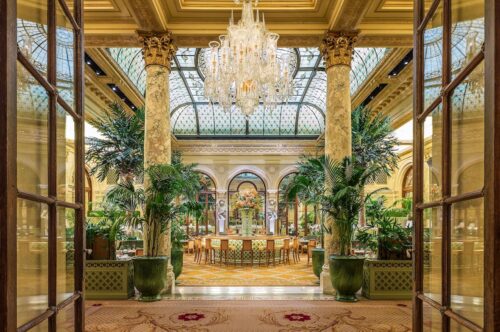
The Address Before the Towers
The Plaza opened on October 1, 1907, designed by Henry Janeway Hardenbergh, the architect also responsible for the Dakota.
Its French Renaissance-inspired architecture offers a different expression of grandeur from the slender residential towers nearby. The elaborate façade and distinctive roofline make the building recognizable even to people who have never stayed there.
Its cultural history is equally familiar. The Beatles, Truman Capote and F. Scott Fitzgerald are among the names associated with the hotel; for other generations, the connection begins with Eloise.
That combination of architecture and shared memory gives The Plaza a place in the neighborhood that extends well beyond its guestrooms.
What Remains Unclear for Residents
The Plaza is also home to private residences. Following its partial conversion in the early 2000s, the property now includes 282 hotel rooms and 181 condominiums.
As reported by The New York Times, operator Fairmont Hotels & Resorts has not clarified whether condominium residents will need to relocate during the work.
For owners, the practical questions are substantial: access, construction disruption and the availability of services. Those details will need to come from the operator and the relevant residential management as plans develop. A hotel closure alone does not establish what arrangements will apply to private homes.
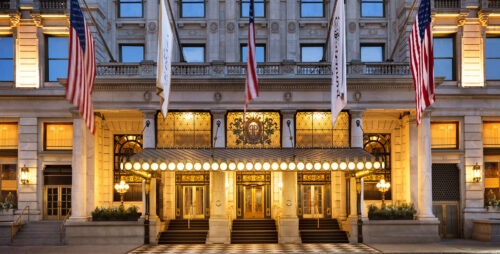
A Different Chapter for Central Park South
The closure will temporarily remove a familiar destination from the neighborhood’s daily life: a place to meet, celebrate, stay or bring visiting friends.
For the 57th Street corridor, it is also a reminder that the character of the area depends on buildings from very different eras. New towers attract attention, while older landmarks require continuing care to retain the details that make them distinctive.
There is no basis yet to draw conclusions about the closure’s effect on nearby residential prices. Its immediate significance is more tangible: one of the neighborhood’s defining hotels will be out of service for several years.
The Plaza’s next chapter will begin with the work of preserving what made it recognizable in the first place.
Want to learn more? Let’s talk!
All the best,
Howard Morrel & Leslie Hirsch
Christie’s International Real Estate
(212) 956-4823
mha@christiesrealestateny.com
