
One of the last reminders of Manhattan’s Gilded Age could soon make way for the next chapter of Billionaires’ Row.
By Howard Morrel & Leslie Hirsch
Along a stretch of Manhattan now defined by soaring skyscrapers and some of the world’s most exclusive residential addresses, a rare piece of New York history has changed hands.
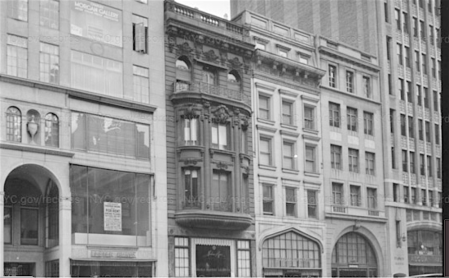
The Schieffelin-Bowne House at 35 West 57th Street, a historic Beaux-Arts mansion dating back to 1891, has sold for $42 million to real estate developer Sedesco.
The sale marks an important development for Billionaires’ Row, where the mansion has stood for more than 130 years, witnessing the remarkable transformation of one of New York’s most prestigious streets.
A Vanderbilt Legacy on 57th Street
Long before Billionaires’ Row became known for its slender residential towers, West 57th Street was home to some of New York’s wealthiest families.
Built in 1891, the Schieffelin-Bowne House was originally given as a wedding gift to Maria Louisa Vanderbilt Shepard, granddaughter of William H. Vanderbilt, and her husband, William Jay Schieffelin.
The couple lived in the mansion until 1899, when it was sold to businessman and philanthropist Samuel W. Bowne.
With its elaborate Beaux-Arts façade and distinguished architectural details, the residence became part of a neighborhood once known as Millionaires’ Row.
Over the following decades, the surrounding mansions gradually disappeared as Midtown evolved into a commercial and cultural center. The Schieffelin-Bowne House remained, although its lower floors were eventually adapted for retail use.
Today, it stands as one of the few surviving reminders of 57th Street’s residential past.
A New Chapter for Billionaires’ Row
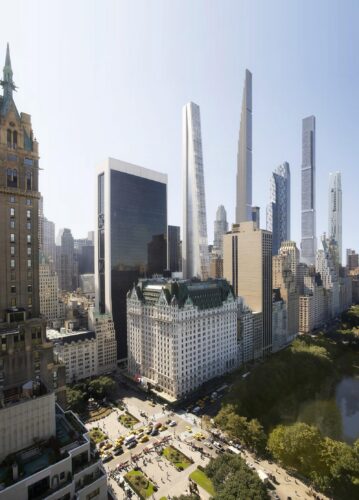 The property’s new owner, Sedesco, has spent more than a decade assembling neighboring parcels along West 57th Street for a major mixed-use development.
Earlier plans for the site envisioned an approximately 1,100-foot-tall tower featuring luxury condominium residences, a hotel, and restaurant space.
The acquisition of 35 West 57th Street adds another significant piece to the developer’s plans, although the final design and development timeline have yet to be confirmed.
The mansion’s future remains uncertain. Demolition plans have received city approval, while preservation advocates continue calling for its historic architectural features to be retained.
The sale therefore represents more than another major real estate transaction. It raises a familiar question in New York: how can the city continue to evolve while preserving the architecture that tells its story?
From Millionaires’ Row to Billionaires’ Row
Few streets illustrate New York’s transformation quite like 57th Street.
What began as an address for Gilded Age mansions has become one of the world’s most recognizable luxury real estate corridors, home to architectural landmarks and record-setting residential developments.
The $42 million sale of 35 West 57th Street is another milestone in that continuing evolution.
Whether the historic mansion can be preserved or ultimately makes way for a new landmark, its story remains an important part of the architectural heritage that has shaped 57th Street for generations.
Want to learn more? Let’s talk!
All the best,
Howard Morrel & Leslie Hirsch
Christie’s International Real Estate
(212) 956-4823
mha@christiesrealestateny.com
